Need roof replacement in Freeburg?
Have a roof question or a list of warning signs? Request a callback to check provider availability, or send a request and a local provider will follow up.
No obligationthe Freeburg area roof replacement, matched to local pros
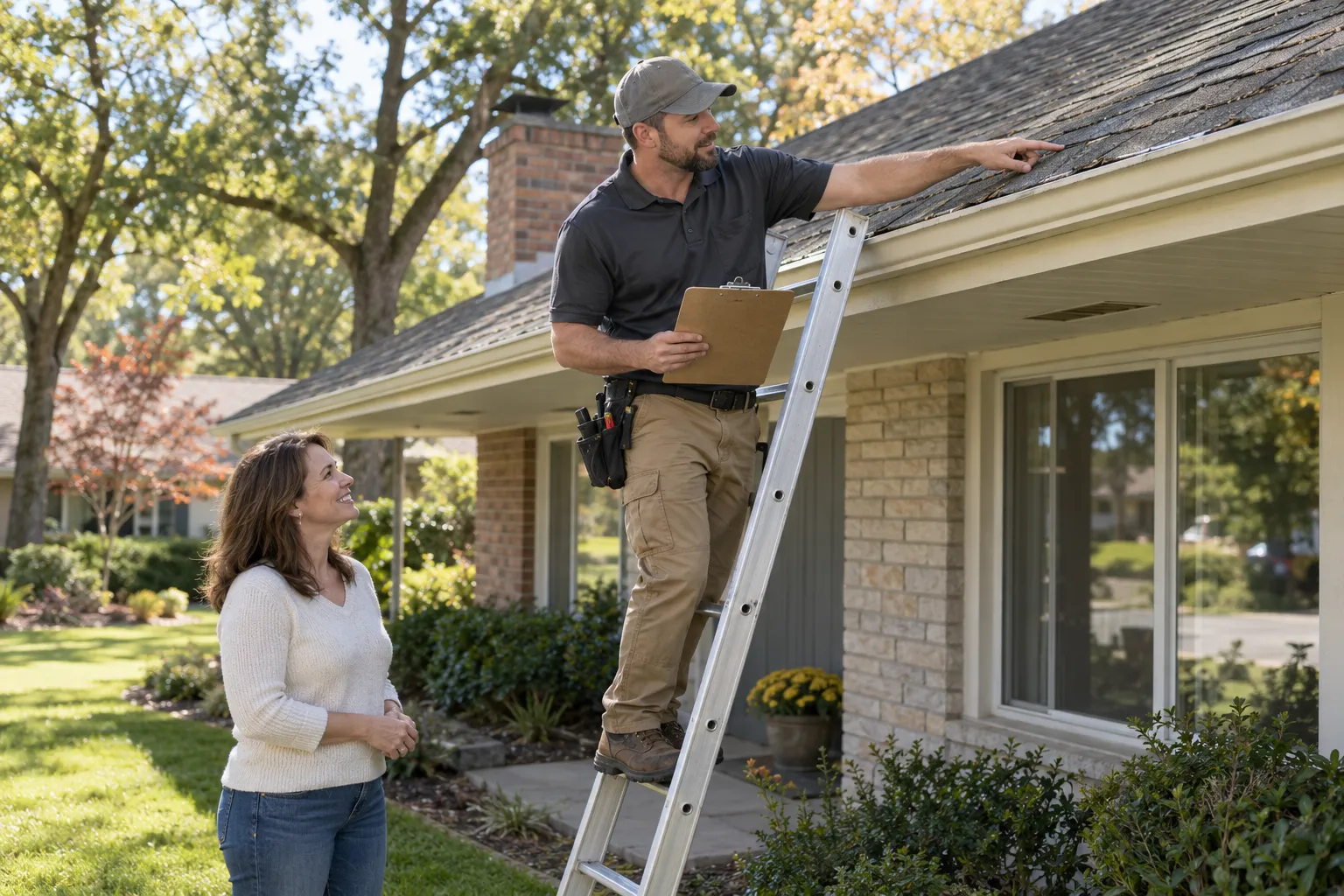
An old roof rarely fails all at once. It gives small hints first. A few curled shingles, a dark stain on a ceiling, or granules in the gutter can all mean the end is near.
Holdingquestions Roofing is a referral service. We do not install roofs. We connect homeowners in Freeburg and the Freeburg area with independent local providers who inspect the roof and quote a replacement. Our checklist keeps the first step simple. First, spot the signs. Next, write them down. Then talk to a provider. Acting early gives you time to compare quotes, pick a material, and book a good weather window instead of rushing after a leak.
Use this short list. Two or more checks mean an inspection is worth your time.
One damaged spot can sometimes be patched. Many problems at once usually point to a full replacement.
Walk the yard first. Use binoculars if you can. Stay off the roof.
Write down what you see and take photos. Spot it early, and your options stay wide.
Next, check the attic and ceilings.
In homes with full basements, also look for damp patches near outside walls. Roof water can travel far before it shows.
Timing changes the outcome. Here is the usual order of events when a worn roof keeps getting wet.
Water slips under loose shingles and soaks the underlayment. You may see only a small stain.
Decking starts to hold moisture. Insulation gets damp and loses its value. Mold can begin in dark, closed spaces.
Cold winters add freeze and thaw cycles. Trapped water expands, and cracks grow. A fixable roof can become a rotted deck.
Severe thunderstorms and hail hit this region often. Hail can bruise shingles and knock off the protective grit. The damage is not always easy to see from the ground.
If you think you need hail damage roof replacement, take dated photos and note the storm date. Providers can often help document damage for a claim. Some policies may cover sudden damage, so check your policy. This is also the stage where storm damage repair questions turn into replacement questions.
If you searched for emergency roof repair, note that this page covers new roofs only. A provider can tell you whether the roof is past saving.
A full job usually follows this order:
1. Protect the yard, siding, and landscaping. 2. Remove the old roofing. 3. Check the deck and replace rotten boards. 4. Add underlayment and ice barrier at the edges. 5. Install flashing, vents, and new roofing. 6. Clean up and check for loose nails.
A tear-off removes the old layer. A roof-over adds new material on top.
Tear-off lets the provider see the deck. That matters on older frame houses, bungalows, and ranch homes where moisture may hide. A roof-over costs less up front, but it adds weight and can cover problems. Many local codes limit how many layers a roof may have. Ask the provider to explain the choice in writing.
Compare these points for each option:
Hot humid summers and deep frost winters are hard on any roof. Ask which option suits your climate and your attic ventilation.
Most towns require a permit for a new roof. Ask who pulls it. Spring and fall are popular, so book early. Rain, high winds, and deep cold can delay work. A flexible schedule helps. Also ask what the provider does if weather hits mid-job.
There are two kinds. One covers the material from the maker. The other covers the provider's workmanship. Ask for both in writing. Ask what voids them, and whether they pass to a new owner if you sell.
Bring this list to every provider:
1. Are you licensed and insured in my state? 2. Is the quote written and itemized? 3. Is tear-off included? 4. Who handles permits and cleanup? 5. What happens if the deck needs repairs? 6. How long will the job take?
First, write down your signs. Next, gather photos. Then request an estimate. Independent local roofing contractors in our network can inspect and quote. Compare at least two written quotes before you choose.
A provider checks shingles, flashing, and the deck to decide if replacement makes sense.
Worn layers come off, and the bare deck is checked for rot or damage.
Underlayment, flashing, vents, and your chosen material go on in the proper order.
Debris and stray nails are cleared, and the finished roof is reviewed with you.
Prices vary by roof size, pitch, material, and local rates. These are typical U.S. ranges only. Always get a written quote from each provider before you decide.
| Item | Typical range | Notes |
|---|---|---|
| Asphalt shingle roof | $6,000 – $15,000 | Common choice for average homes |
| Impact-resistant shingles | $8,000 – $20,000 | Often used in hail-prone areas |
| Metal roof | $12,000 – $35,000 | Longer lifespan, higher upfront price |
| Tear-off of old layers | $1,000 – $3,000 | Rises with each extra layer |
| Deck repair or replacement | $500 – $4,000 | Depends on how much wood is rotted |
| Permit and disposal | $150 – $1,000 | Varies by town and debris volume |
List what you see outside and inside, and take dated photos of each spot.
Request a callback or send the request form so we can match you.
Providers inspect the roof and send itemized quotes for material, labor, and extras.
Pick a provider, confirm the permit, and set a date with weather room.
We help you note the signs and photos before any provider visits your home.
You are matched with independent roofing providers who work in your area.
First, next, then. The process stays short, organized, and easy to follow.
Request an estimate, compare quotes, and decide only when you feel ready.
Have a roof question or a list of warning signs? Request a callback to check provider availability, or send a request and a local provider will follow up.
No obligationOne damaged spot can often be repaired. Widespread curling, bare patches, repeated leaks, or a roof near the end of its lifespan usually point to replacement. A provider's inspection gives you a clear answer.
Many average homes take a few days, but size, weather, roof shape, and deck repairs all matter. Ask each provider for an estimated timeline in writing before you agree to the work.
Some policies may cover sudden damage like hail, but coverage varies. Check your policy and talk to your insurer. Providers can often help document damage for a claim.
Have a roof question or a list of warning signs? Request a callback to check provider availability, or send a request and a local provider will follow up.
No obligation