Need storm and hail damage roof repair in Freeburg?
Have a roof question or a list of warning signs? Request a callback to check provider availability, or send a request and a local provider will follow up.
No obligationthe Freeburg area roof replacement, matched to local pros
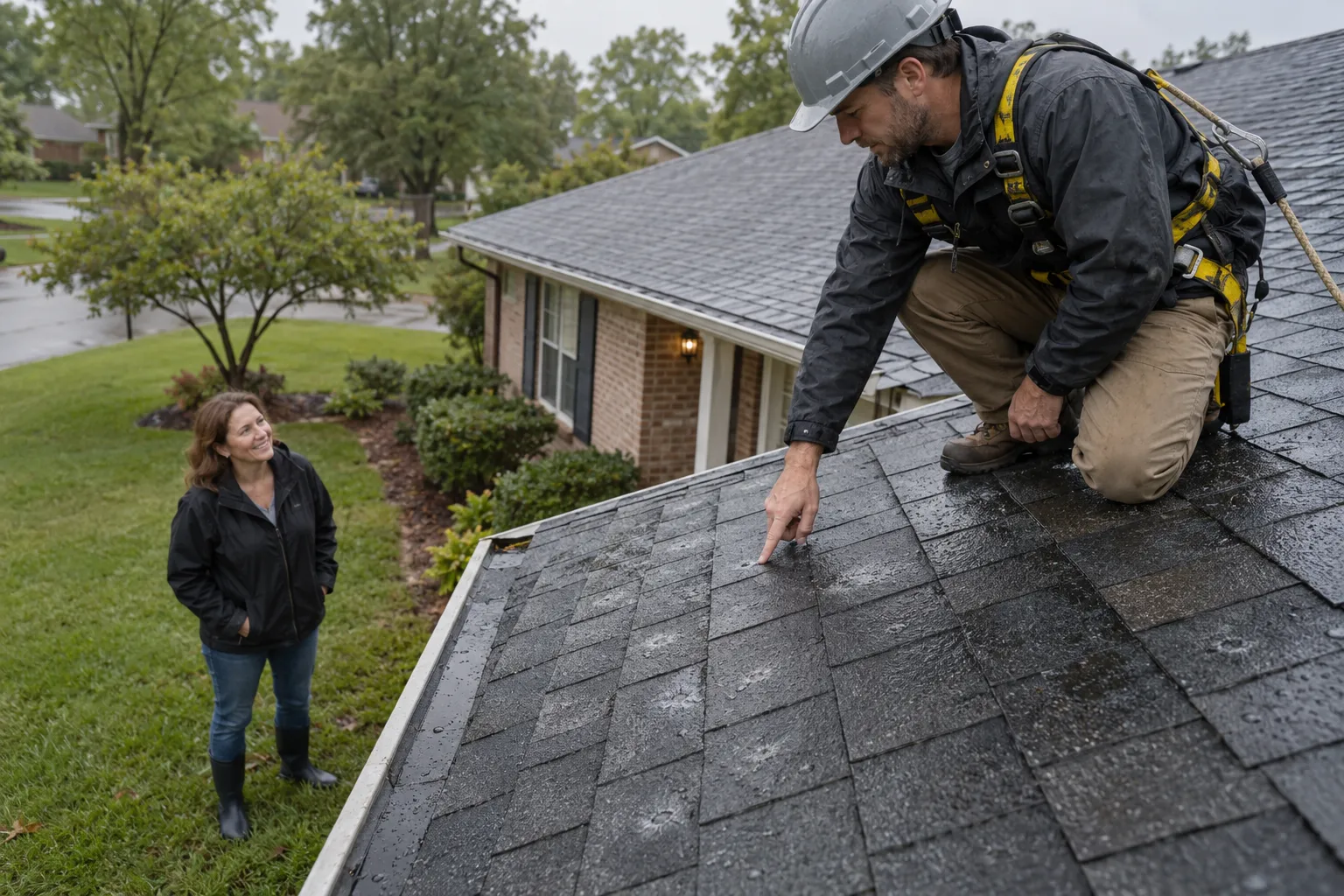
Severe thunderstorms and hail can hit the Freeburg area fast. The first damage is often small. A few cracked shingles. Dented vents. Granules in the gutter. These signs are easy to miss from the ground, and they are easy to ignore once the sky clears.
Holdingquestions Roofing is a referral service. We do not do roofing work. We connect homeowners in Freeburg, IL with independent providers in our network who inspect storm damage and give a written quote. This page gives you a simple checklist. First, stay safe. Next, write down what you see. Then ask a local provider to look at the roof. Acting early can keep a small problem from turning into a wet ceiling, a soaked attic, or a full tear-off.
First, stay off the roof. Wet shingles and loose debris are slippery. Look from the ground instead.
Next, check inside the house:
Then, if you see downed power lines or signs the structure is unsafe, call 911 and leave the area.
If water is coming in, you need a stop-gap plan. Many providers can respond quickly and place a temporary cover over the opening. That cover buys you time. It is not the final fix.
Request a callback to check provider availability in your area. Availability varies by provider and by how many homes the storm hit.
Timing changes the outcome. Here is how a small opening tends to grow:
1. First hours: Rain slips under cracked or lifted shingles. 2. Day one: Attic insulation soaks up water. A brown stain may show on a ceiling. 3. Days two to three: Roof decking stays wet and starts to soften. In hot, humid weather, mold can begin to form. 4. First week: Stains spread. Paint bubbles. Nails may rust. 5. Weeks later: Water in cracks turns to ice in cold weather. Each frost cycle pries the gap wider.
Spot it early. Every step down this list costs more to fix.
Walk the yard and write down what you see:
If you see dents on metal items, the shingles above may be hurt too.
Storm damage repair starts with knowing what you have. Common types:
A provider in our network will usually check these items:
1. Shingles across every slope 2. Flashing, vents, and chimney edges 3. Gutters and downspouts 4. Attic space for wet wood or stains 5. Roof deck condition where shingles are lifted
You should get photos and a written quote. Keep both.
Our referral service focuses on replacement projects. That fits many hail cases. Here is a simple test.
Hail damage roof replacement makes sense when the damage is widespread. Ask the provider to explain which case you have.
Some policies may cover sudden storm damage. Check your policy, including the deductible and any time limit for filing.
Providers can often help document damage for a claim. Ask for dated photos and a written scope of work. Your insurer makes the coverage decision, not the provider and not Holdingquestions Roofing.
After a big storm, strangers may knock on doors. Slow down.
A real provider will not mind waiting while you compare.
Bring this list to every visit:
1. Are you licensed and insured in my state? 2. Will you put the scope and price in writing? 3. What materials do you plan to use? 4. Who handles cleanup and permits? 5. How do you protect the roof if rain comes mid-job?
Write it down. Note the date of the storm, what you saw, and every photo you took. Add each quote and call. A clear log helps with providers and with any claim.
First, make the house safe. Next, record the damage. Then request an estimate and compare written quotes.
Independent providers inspect the roof and put findings and pricing in writing for you to compare.
Shingles, vents, and flashing are looked at for bruises, cracks, and lost granules.
Lifted, curled, or missing shingles are noted along edges, ridges, and corners.
Providers can check for damp wood, stained insulation, and leaks that start inside the attic.
Costs vary by roof size, pitch, materials, and how much damage there is. These are typical U.S. ranges only. Always get a written quote from a provider before you agree to any work.
| Item | Typical range | Notes |
|---|---|---|
| Roof inspection | $150 – $400 | Some providers include it with a quote |
| Temporary tarp or cover | $300 – $1,000 | Stop-gap only, not a final fix |
| Small shingle patch | $300 – $1,500 | Only for limited, isolated damage |
| Decking replacement | $70 – $120 per sheet | Needed when wood is soft or wet |
| Asphalt shingle replacement | $8,000 – $20,000 | Common for widespread hail damage |
| Metal roof replacement | $15,000 – $40,000 | Higher upfront, long service life |
Stay off the roof, avoid wet ceilings, and call 911 for downed lines or structural danger.
Take dated photos from the ground and inside. Note stains, dents, and missing shingles.
Ask to be matched with a local provider who inspects and quotes the roof.
Review scope, materials, and price. Ask questions, then choose the provider that fits your home.
Our steps keep you organized, so nothing gets missed while you are stressed after a storm.
We connect you with independent providers in our network who know the hail and weather in your area.
Ask for scope and price on paper so you can compare offers calmly and fairly.
Spotting damage early can stop a small leak from becoming a larger and costlier problem.
Have a roof question or a list of warning signs? Request a callback to check provider availability, or send a request and a local provider will follow up.
No obligationAs soon as it is safe. Small cracks and bruises let water in during the next rain. Early checks help you catch damage before it spreads to the decking, attic, and ceiling.
Some policies may cover sudden damage from hail or wind. Coverage depends on your policy, deductible, and roof age. Check your policy, and ask providers to help document the damage for a claim.
Sometimes. Look for dented gutters, vents, and flashing, plus granules near downspouts. But many hail marks on shingles are hard to see from below, so a provider inspection gives a clearer answer.
Have a roof question or a list of warning signs? Request a callback to check provider availability, or send a request and a local provider will follow up.
No obligation